Physical Human–Robot Interaction
How robots sense, interpret, and respond to contact and force during shared manipulation tasks.
PhD Candidate · TU Wien
Robotics researcher working at the intersection of physical human–robot interaction, imitation learning, and telerobotics.
How robots sense, interpret, and respond to contact and force during shared manipulation tasks.
Learning manipulation skills from human demonstrations, including contact-rich and dual-arm tasks.
Remote operation systems for dexterous tasks, with a focus on transparency and shared control.
Robotic construction and manipulation in extraterrestrial environments — operating reliably under communication delay and harsh conditions.
Robotic systems that augment clinicians and assist users in healthcare and lab-automation settings.
Patent application · Austrian Patent Office.
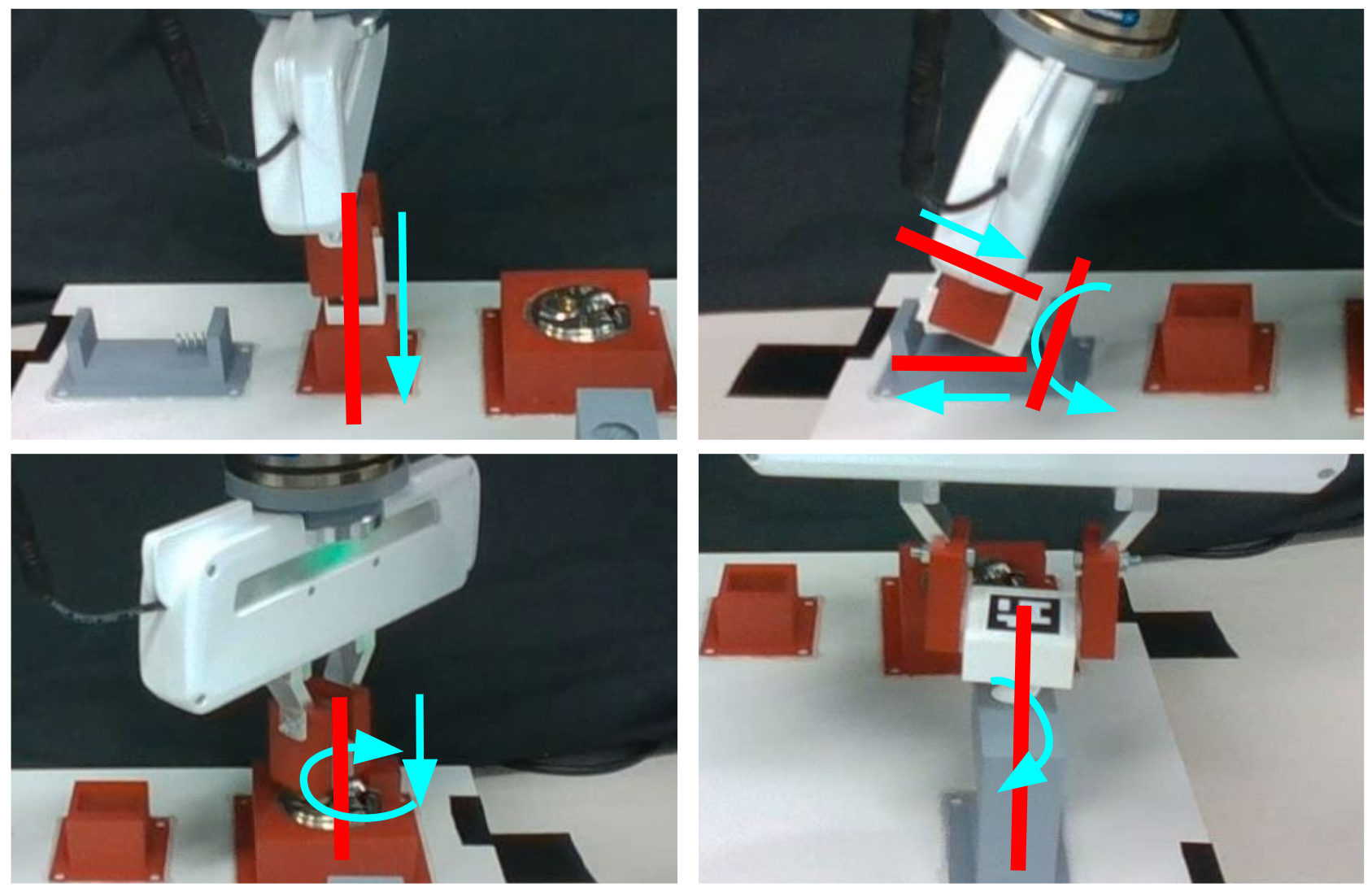
arXiv preprint, 2026.
Learning both forward and reverse manipulation skills from a single incomplete demonstration by combining dynamic movement primitives for free motion with screw motion primitives for contact phases.
@article{hu2026learning,
  author  = {Hu, Y. and Zheng, H. and Heidersberger, J. and Lee, D.},
  title   = {Learning Forward \& Reverse Skills from a Single Unfinished Demonstration for Constrained Manipulation Tasks},
  journal = {arXiv preprint arXiv:2607.13882},
  year    = {2026}
}
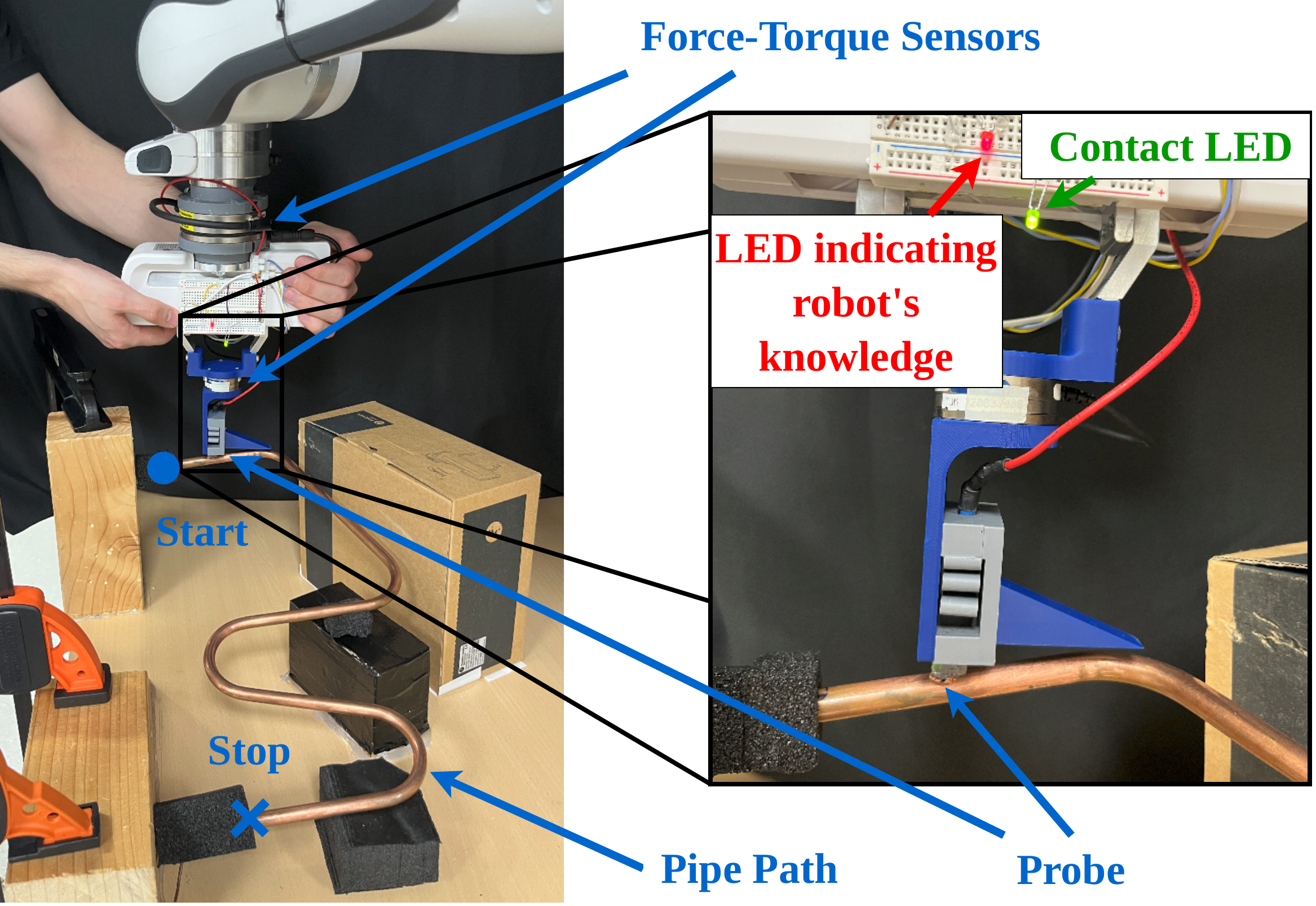
IEEE Robotics and Automation Letters (RA-L), vol. 11, no. 7, pp. 9040–9047, 2026.
Learning robot skills from imperfect demonstrations by combining the locally best parts of each, and actively requesting user corrections only where good data is missing.
@article{heidersberger2026lopal,
  author  = {Heidersberger, J. and Jadav, S. and Lee, D.},
  title   = {{LOPAL}: Local Performance-Aware Active Learning from Imperfect Demonstrations},
  journal = {IEEE Robotics and Automation Letters},
  volume  = {11},
  number  = {7},
  pages   = {9040--9047},
  year    = {2026}
}
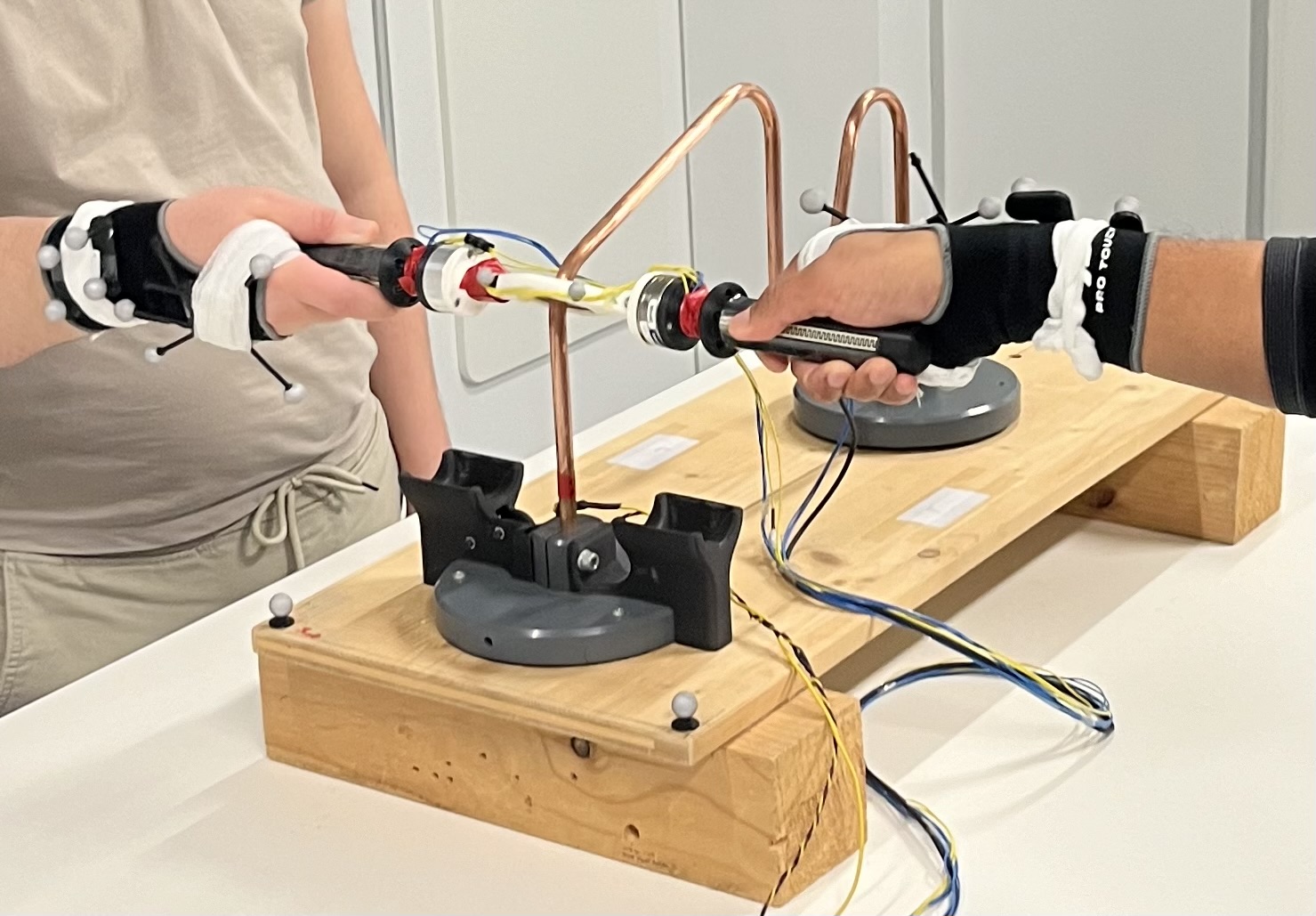
Scientific Reports, vol. 15, 2025.
Human-subject study showing that repeated dyadic interaction produces partner-specific coordination strategies that are retained and reused.
@article{heidersberger2025partner,
  author  = {Heidersberger, J. and Kaiser, J. and Jadav, S. and Mihi{\'c} Zidar, L. and Curioni, A. and Johannsen, L. and Lee, D.},
  title   = {Partner familiarity enhances performance in a manual precision task},
  journal = {Scientific Reports},
  volume  = {15},
  year    = {2025}
}
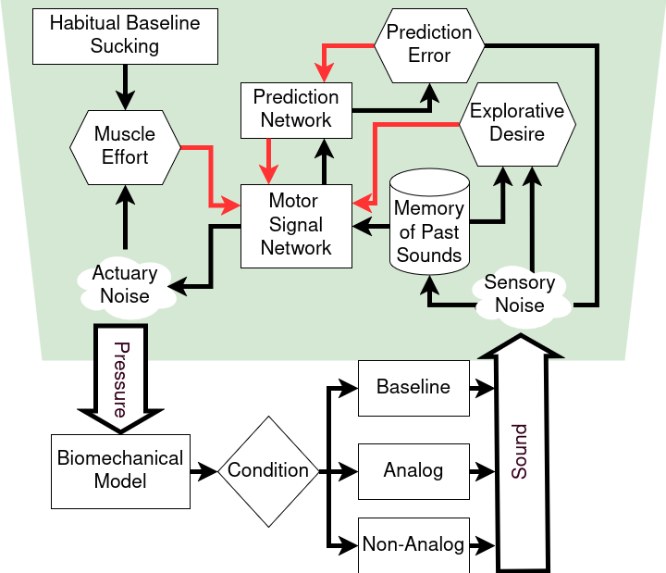
IEEE Int. Conf. on Development and Learning (ICDL), 2025.
Computational models of how early sensorimotor self-exploration emerges in 2-month-old infants, bridging developmental robotics and cognitive science.
@inproceedings{spisak2025computational,
  author    = {Spisak, J. and Benad, J. and Heidersberger, J. and Verschoor, S. and Lanillos, P. and Lee, D. and Eppe, M. and Wermter, S. and Hoffmann, M. and Tcaci Popescu, S.},
  title     = {Computational models of the emergence of self-exploration in 2-month-old infants},
  booktitle = {IEEE International Conference on Development and Learning (ICDL)},
  year      = {2025}
}
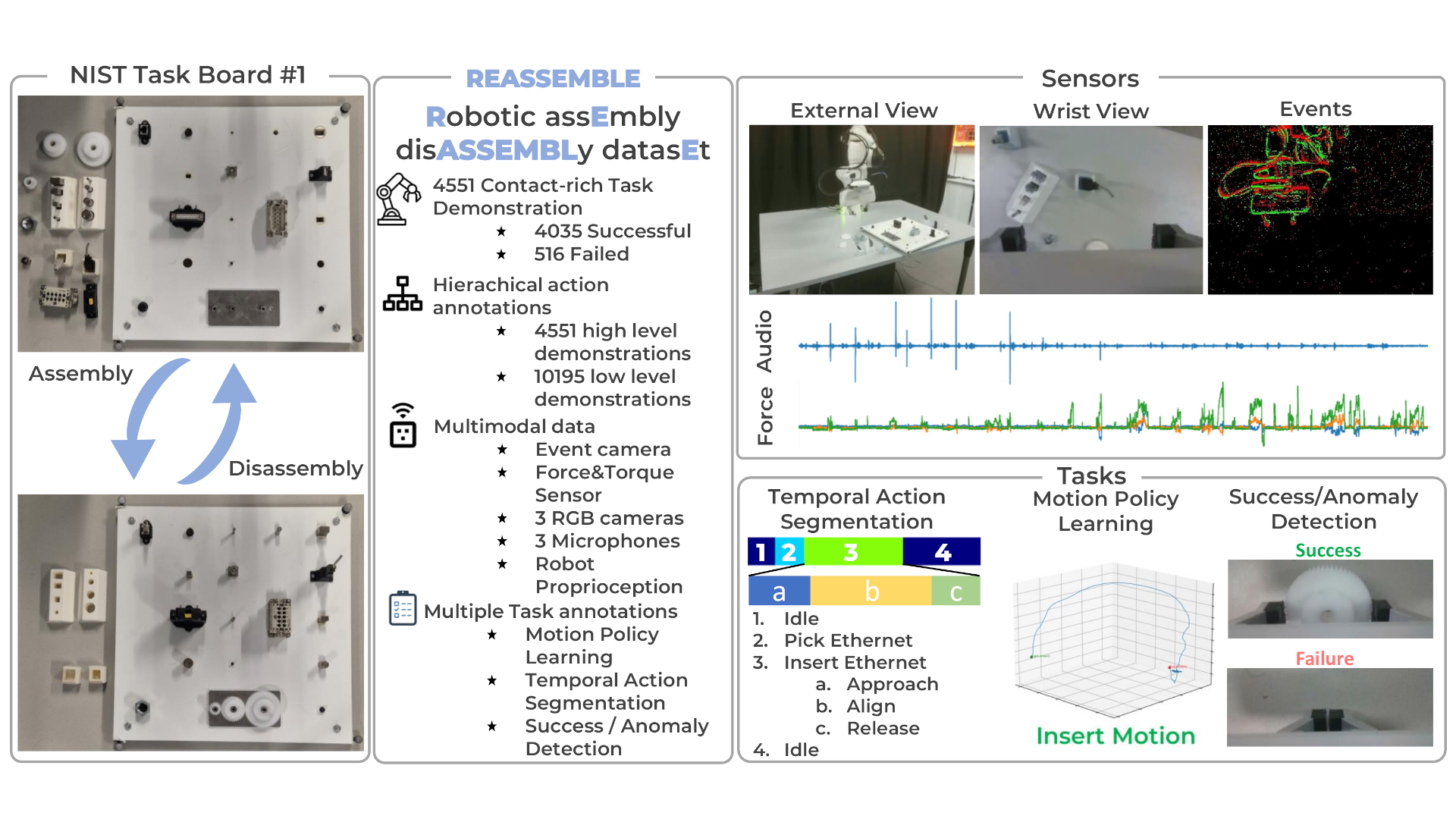
Robotics: Science and Systems (RSS), 2025.
A multimodal dataset of 4,551 contact-rich assembly demonstrations with event cameras, force/torque sensors, audio, and multi-view RGB.
@inproceedings{sliwowski2025reassemble,
  author    = {Sliwowski, D. and Jadav, S. and Stanovcic, S. and Orbik, J. and Heidersberger, J. and Lee, D.},
  title     = {{REASSEMBLE}: A Multimodal Dataset for Contact-rich Robotic Assembly and Disassembly},
  booktitle = {Robotics: Science and Systems (RSS)},
  year      = {2025}
}
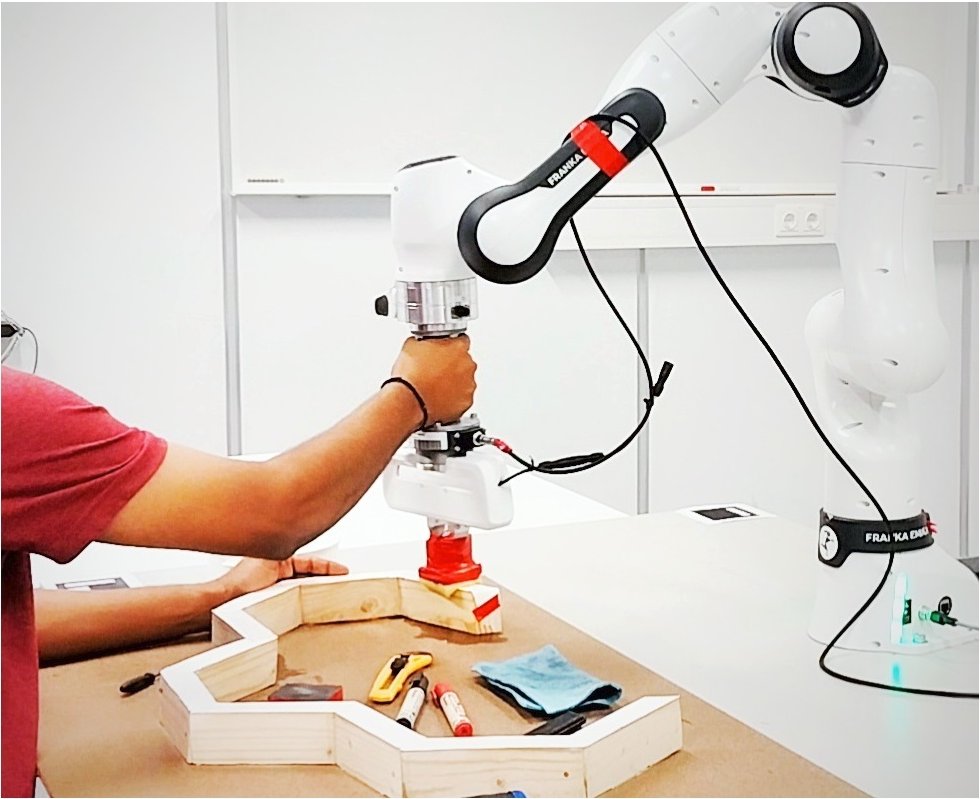
* Equal contribution
IEEE Int. Conf. on Robotics and Automation (ICRA), 2024, pp. 15151–15157.
Encoding human demonstrations with variable impedance control and virtual potential fields for robust shared-autonomy skill transfer.
@inproceedings{jadav2024shared,
  author    = {Jadav, S. and Heidersberger, J. and Ott, C. and Lee, D.},
  title     = {Shared Autonomy via Variable Impedance Control and Virtual Potential Fields for Encoding Human Demonstrations},
  booktitle = {IEEE International Conference on Robotics and Automation (ICRA)},
  pages     = {15151--15157},
  year      = {2024}
}
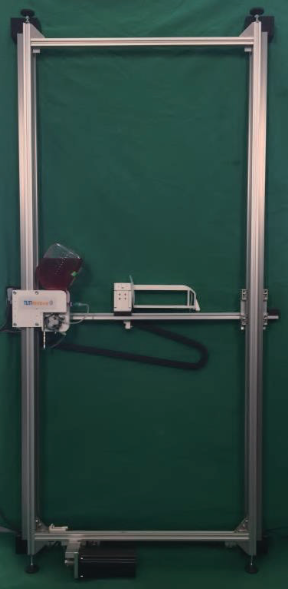
IEEE Int. Conf. on Robotics and Biomimetics (ROBIO), 2022, pp. 2243–2248.
A compact mechanism enabling automated cell-culture media change inside incubators, developed for life-science lab automation.
@inproceedings{artmann2022single,
  author    = {Artmann, L. and Heidersberger, J. and Lueth, T. C.},
  title     = {Single Action Push to Tilt Mechanism for Cell Culture Media Change within Incubators for Screw Cap Flasks},
  booktitle = {IEEE International Conference on Robotics and Biomimetics (ROBIO)},
  pages     = {2243--2248},
  year      = {2022}
}
I am a PhD candidate in the Research Unit of Autonomous Systems at TU Wien, advised by Prof. Dongheui Lee, investigating how humans and robots can physically collaborate.
I previously contributed to the SOLAR project on learning body representations during dyadic collaboration, and now work on Lunar Assembly — enabling remote robotic construction under the constraints of the lunar environment, including multi-second communication delays. I hold a B.Sc. degree in Mechanical Engineering and dual M.Sc. degrees in Mechatronics & Robotics and Mechanical Engineering from TU Munich .
I'm happy to discuss collaborations and research questions. The fastest way to reach me is by email.